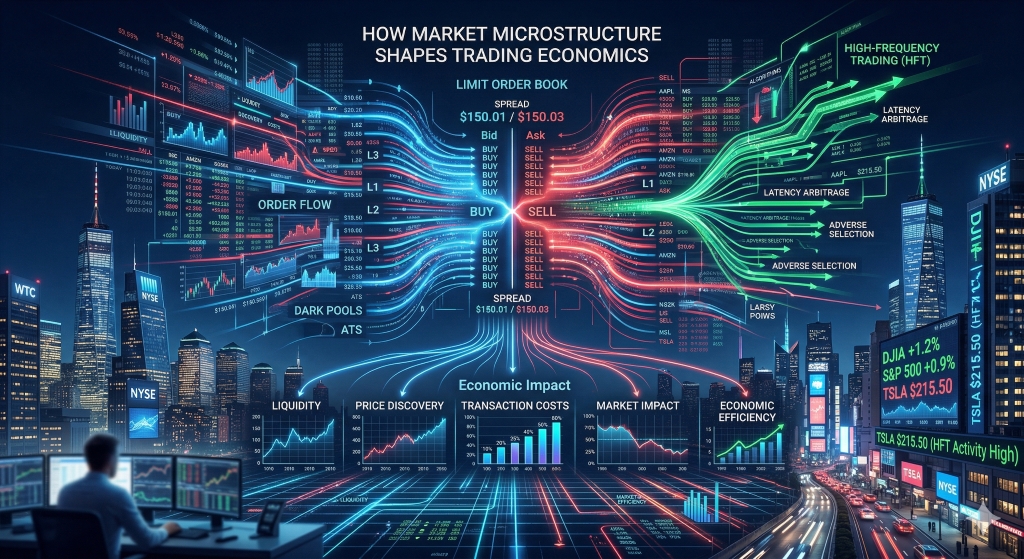
In the digital economy, speed is not just a feature; it is the fundamental currency of trust. For a High-Frequency Trading (HFT) firm, a microsecond delay can mean millions in lost arbitrage opportunities. For an e-commerce giant, a 100-millisecond delay can slash conversion rates by 1%. For a healthcare provider, latency in data transmission can delay critical patient diagnostics.
While engineers tune the kernels and network architects optimize the routing tables, the Business Analyst (BA) and Systems Analyst play a critical, often overlooked role: defining the "Why," measuring the "What," and justifying the "How much."
This guide explores the anatomy of latency, the metrics that actually matter (and the ones that lie), and how analysts can drive performance optimization that aligns with business value.
To analyze performance, one must first deconstruct it. "The system is slow" is not a requirement; it is a complaint. An analyst must be able to break down "slowness" into its constituent components.
Latency is the time interval between a stimulation and a response. In networking and software, it is the time elapsed between a user action (clicking a button) and the application's response (seeing the result).
It is often confused with Bandwidth.
When a user experiences "lag," it is usually due to one of four bottlenecks:
A dashboard full of green lights can still result in angry users. This happens when analysts track the wrong metrics.
Never accept "Average Response Time" as a primary KPI. Averages hide outliers.
Analysts must define Non-Functional Requirements (NFRs) using percentiles.
Analyst Takeaway: When writing SLAs (Service Level Agreements), specify: "The system must respond within 200ms for 99% of requests (P99 < 200ms)."
This measures the time from the user making a request to receiving the first byte of data.
You do not need to write the code to prescribe the solution. An analyst identifies the bottleneck and proposes the high-level strategy based on ROI (Return on Investment).
The fastest query is the one you never make.
This is where the analyst adds the most value. Optimization is expensive. Engineering time is expensive. Cloud infrastructure is expensive. The analyst must answer: "Is it worth it?"
Latency is not just a technical metric; it is a user experience metric and, ultimately, a revenue metric. The modern analyst must move beyond gathering functional requirements ("The system must allow login") to mastering non-functional requirements ("The login must complete in under 200ms at P99"). By speaking the language of percentiles, understanding the architecture of bottlenecks, and rigorously calculating the ROI of speed, the analyst becomes the bridge between a sluggish system and a high-performance business.
BA Blocks
Industry Certification Programs:
CFA(Chartered Financial Analyst)
FRM(Financial Risk Manager)
CAIA(Chartered Alternative Investment Analyst)
CMT(Chartered Market Technician)
PRM(Professional Risk Manager)
CQF(Certificate in Quantitative Finance)
Canadian Securities Institute (CSI)
Quant University LLC
· MachineLearning & AI Risk Certificate Program
ProminentIndustry Software Provider Training:
· SimCorp
· Charles River’sEducational Services
Continuing Education Providers:
University of Toronto School of Continuing Studies
TorontoMetropolitan University - The Chang School of Continuing Education
HarvardUniversity Online Courses
Study of Art and its Markets:
Knowledge of Alternative Investment-Art
Disclaimer: This blog is for educational and informational purposes only and should not be construed as financial advice.